Unlock crm and digital marketing: A Growth Engine
When you bring your CRM and digital marketing tools together into one cohesive system, that's when the real magic happens. This integration allows you to deeply understand your customers (the CRM part) and then act on that knowledge with personalised, timely communication (the digital marketing part). Suddenly, disjointed efforts become a powerful, unified growth engine.
Why CRM and Digital Marketing Are Your Business Power Couple

Think of your Customer Relationship Management (CRM) system as the brain of your business. It's the central hub that stores every vital piece of information about your contacts—who they are, what they’ve bought, and every single interaction they've had with your brand. But on its own, this data is just a library of facts. It has potential, but it isn't doing anything.
Now, think of your digital marketing tools—email, SMS, social media—as the body's nervous system. They are responsible for carrying messages and actions out into the world. When disconnected from the brain, these actions are clumsy and often miss the mark. It's like sending a generic "welcome" email to a customer who has been loyal to you for years. It just feels off.
The Power of a Unified System
When you connect the two, you create a powerful feedback loop. Data from the CRM informs marketing actions, and the results of those actions create new data that flows right back into the CRM. This isn't just a fancy tech setup for big corporations anymore; it’s a non-negotiable strategy for any business serious about growth.
The numbers back this up. The Indian CRM software market, valued at a substantial $2315.0 million in 2024, is expected to skyrocket to $7667.5 million by 2035. This explosive growth shows just how critical smart, automated engagement has become for businesses of all sizes. You can explore the market projections and see the full picture of this trend for yourself.
To make this clearer, let’s look at the difference between running your marketing in silos versus having an integrated system.
Standalone vs Integrated Marketing Systems
| Aspect | Standalone (Siloed) Approach | Integrated (Unified) Approach |
|---|---|---|
| Customer Data | Scattered across different tools (email list, spreadsheet, etc.) | Centralised in one CRM, giving a complete 360-degree view. |
| Marketing Messages | Generic, one-size-fits-all campaigns. | Highly personalised, based on past behaviour and preferences. |
| Customer Journey | Disjointed and confusing for the customer. | Seamless and logical, from first touchpoint to repeat purchase. |
| Team Efficiency | Manual data entry and a lot of guesswork. | Automated workflows and data-driven decisions. |
| Reporting | Hard to connect marketing spend to actual sales. | Clear attribution, showing exactly which campaigns drive revenue. |
As you can see, the integrated approach isn't just a minor improvement—it’s a fundamental shift in how you operate.
This unified strategy delivers a few game-changing advantages:
- Seamless Customer Journeys: Every touchpoint, from an initial website visit to a post-purchase follow-up, feels connected and intuitive for the customer.
- Intelligent Actions: Your marketing messages are triggered by what customers actually do, not what you guess they might want.
- Sustainable Growth: By converting more leads and keeping more customers happy, the system builds its own momentum, creating a flywheel effect for your business.
When your CRM and marketing speak the same language, every customer interaction becomes an opportunity. You move from shouting generic messages at a crowd to having meaningful conversations with individuals, directly impacting your bottom line. This isn't just better marketing; it's a smarter way to run your entire business.
How a Unified Strategy Transforms Your Business
Integrating your CRM and digital marketing is more than a technical task—it's a fundamental shift in how you grow your business. When these two powerhouses work together, they stop being separate departments and become a single, intelligent system built to boost revenue and customer loyalty.
The first and most immediate change you’ll see? The end of lost leads. With a unified platform, every single enquiry—whether it comes from a website form, a social media DM, or a live chat—is instantly captured and organised in your CRM. No more scattered spreadsheets or overflowing inboxes. Just one single source of truth.
More importantly, it allows for instant, automated follow-up. Speed is everything when it comes to converting a new lead. An integrated system can trigger an immediate email or SMS, ensuring no prospect is ever left waiting. This one simple action can dramatically increase your chances of turning a casual enquiry into a real conversation.
Achieve Hyper-Personalisation at Scale
Let's be honest: generic, one-size-fits-all marketing just doesn't cut it anymore. Your customers expect you to know who they are and what they care about. A unified CRM and marketing strategy makes this possible without adding hours of manual work for your team.
Your CRM is a goldmine of customer data. It tracks everything from past purchases and support tickets to which pages they visited on your website. An integrated marketing platform puts this information to work, delivering hyper-personalised experiences automatically.
- For an e-commerce store: A customer who often browses your "men's sneakers" category could get an automated email showcasing new arrivals in that exact category.
- For a service business: A client who booked a "deep cleaning" service could receive an SMS reminder six months later with a special offer for a follow-up appointment.
This isn't just clever marketing. It makes your customers feel seen and understood, which is a powerful way to earn their business and keep them coming back.
Use Intelligent Segmentation for Better Campaigns
Beyond personalising one-to-one messages, a unified system lets you group your audience into smart segments for more powerful campaigns. Instead of blasting the same promotion to your entire contact list, you can create focused groups based on real data from your CRM.
By grouping contacts based on their actions, demographics, or purchase history, you can send highly targeted campaigns that actually resonate. This means higher open rates, more clicks, and ultimately, a much better return on your marketing spend.
Imagine being able to create segments with just a few clicks, like:
- "Engaged Prospects" who have opened your last three emails but haven't bought anything yet.
- "High-Value Customers" who have spent over a certain amount in the last year.
- "Inactive Subscribers" who haven't engaged in 90 days, ready for a targeted re-engagement campaign.
Get Crystal-Clear Marketing Attribution
Finally, and perhaps most importantly, integration brings true marketing attribution. Every business owner wants to know the answer to one question: "Which of my marketing efforts are actually making me money?" A unified system gives you the answer.
Because the entire customer journey is tracked in one place—from the first ad click to the final sale—you can directly connect your marketing spend to your revenue. You can see precisely which campaigns, channels, and even which specific emails are bringing in your most valuable customers.
This data is your superpower. It lets you double down on what works and stop wasting money on what doesn't, optimising your marketing budget for maximum impact.
Building Your First Automated Marketing Machine
The real magic happens when you connect your CRM and digital marketing through automation. This is where you build a smart, self-running system that captures, qualifies, and nurtures leads around the clock. Think of it like hiring the perfect employee—one who never sleeps, never misses a lead, and always says the right thing at the right time.
Let's walk through a practical blueprint for this machine. We’ll follow a common scenario: a new lead finds your business online and fills out a "Request a Quote" form on your website. Without automation, that lead just sits in an inbox, waiting for someone to get to it. With an integrated system, a powerful sequence kicks off instantly.
Step 1: The Instant Handshake
The moment a lead hits 'submit', the process begins. This isn't just about sending an email; it's about making an immediate, personal connection across multiple channels. A well-designed workflow ensures nothing falls through the cracks.
This initial engagement is where speed is everything. Research consistently shows that responding to a lead within the first five minutes can dramatically increase conversion rates.
Crucial Insight: An AI-powered assistant can engage new leads via SMS or website chat in under 90 seconds. This isn't just fast; it’s a game-changer that ensures you’re the first one to respond, massively boosting your odds of winning their business.
Here’s how that first touchpoint unfolds:
- Instant Capture: The lead’s information (name, email, phone number) is automatically added to your CRM and tagged as a ‘New Lead’.
- AI Engagement: An AI assistant immediately sends a personalised SMS: "Hi [First Name], thanks for your quote request. To give you the most accurate price, could you tell me a bit more about what you're looking for?"
- Automatic Nurturing: At the same time, the lead is added to an email nurture sequence designed for new prospects. It starts with a welcome message that introduces your brand and sets expectations.
This entire process happens in seconds, creating a seamless and impressive first impression while your team stays focused on other high-value tasks.
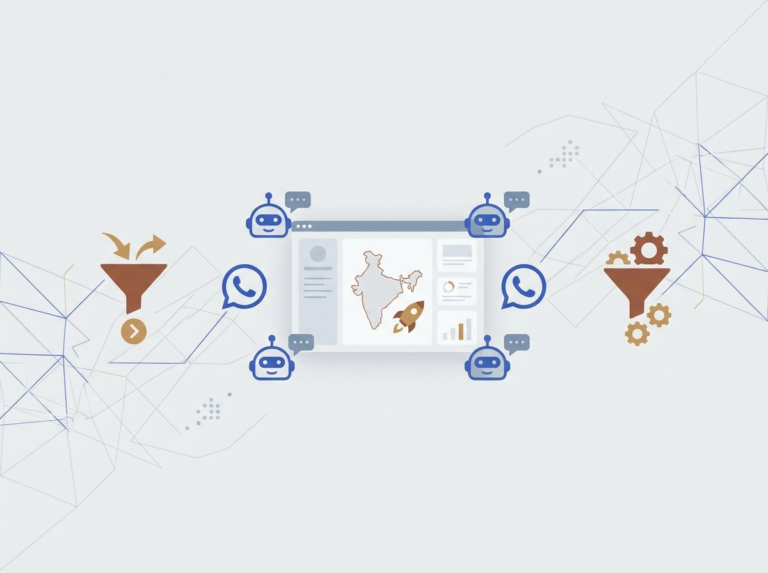
The following diagram shows the core flow of capturing, personalising, and segmenting leads in a unified strategy.

As you can see, a single lead capture event can trigger a series of personalised actions, automatically moving the prospect through the initial stages of your marketing funnel.
Step 2: Triggering the Next Move
Good automation isn’t just about the first touch; it’s about listening and reacting to a lead’s behaviour. Your system should be constantly on the lookout for buying signals. For instance, what happens if the lead clicks a link in your welcome email that leads to a specific service page?
That click is a clear signal of interest. An automated rule can then trigger the next step in the journey:
- Segment Change: The system automatically moves the contact from the 'New Lead' segment to a 'Warm Lead' segment.
- Sales Notification: The assigned salesperson gets an instant notification with the lead's full history, including their recent website activity.
- Task Creation: A task is automatically created in the CRM for the salesperson to call the lead within the next 24 hours.
This creates a smooth, context-rich handoff from marketing to sales. You can learn more about building these powerful systems in our complete guide to marketing automation software. By setting up these simple rules, you build an efficient machine that prevents leads from going cold and ensures every opportunity is pursued at the perfect moment.
Proven Campaign Examples That Actually Convert
Theory is great, but let's be honest—it’s seeing things in action that makes it all click. Let's look at how a unified CRM and digital marketing setup really works to generate revenue. These are not just ideas; they are real-world machines built to attract, engage, and convert customers automatically.
We'll break down three practical examples, showing the exact channels, automation rules, and the bottom-line business outcome for each.
Home Service Business Local Lead Funnel
For a local plumber or electrician, every "Get a Quote" click is gold. It’s a high-intent lead that needs to be converted into a booked job before a competitor swoops in. Speed is everything.
- Lead Capture: A prospect finds you through a local search ad and lands on a page offering a free, instant quote. They punch their details into a simple form.
- Instant Engagement: The second they hit "submit," your CRM catches the lead. An AI assistant immediately shoots them an SMS: "Hi [First Name], thanks for your quote request from [Business Name]. To confirm, are you looking for [Service Type] at [Suburb]?".
- Automated Nurturing: If the lead confirms, the system can instantly book a time slot in the calendar or ping a team member to call right away. No reply? No problem. A follow-up email packed with testimonials and service benefits goes out 24 hours later.
The result? A massive jump in scheduled jobs and a huge reduction in the time your team spends manually chasing down leads.
Marketing Agency Client Management
Agencies are constantly juggling campaigns for multiple clients. It can get chaotic. A CRM acts as the central command centre, making it possible to manage all incoming leads and clearly prove your value.
- Centralised Lead Flow: All leads from every client’s campaigns—social media, Google Ads, website forms—pour into the agency's single CRM. Each lead is automatically tagged by client, giving you a crystal-clear, real-time picture of campaign performance.
- Automated Reporting: Forget spending hours building reports. The CRM automatically tracks lead sources, conversion rates, and pipeline value for each client. Custom dashboards are set up to give clients a transparent window into their ROI.
- Workflow Automation: A new lead for "Client A" comes in. This automatically triggers a notification to their dedicated account manager and enrols the lead into a client-specific email nurture sequence.
This setup lets an agency efficiently manage dozens of campaigns without dropping the ball. It automates client reporting and makes it incredibly easy to demonstrate the value you’re delivering, which is the key to high client retention.
Course Creator Webinar Funnel
For anyone selling a course, a webinar is a money-making event. But the real magic happens in the follow-up. A CRM-driven funnel makes this process hyper-efficient by personalising messages based on exactly what each person did.
It all starts with promoting a free webinar on social media. As people register, they’re added to the CRM and tagged as ‘Webinar Registrants’.
After the webinar, the automation gets really smart:
- Attendees who left early? They get an email with a link to the replay and a quick summary of the killer points they missed.
- Attendees who stayed until the end but didn't buy? They’re dropped into a nurture sequence that tackles common objections and shares powerful student success stories.
- Attendees who clicked the offer link but didn’t finish the purchase? An SMS lands on their phone with a time-sensitive bonus to create urgency and nudge them over the line.
This kind of segmentation ensures every single lead gets the most relevant message possible. The impact is a huge boost in course sales compared to just sending a generic, one-size-fits-all follow-up to everyone.
Measuring What Matters for Marketing Success

An integrated CRM and digital marketing system is a goldmine of data. But it's easy to get lost tracking everything under the sun. Real growth doesn't come from vanity metrics like social media likes; it comes from focusing on the numbers that directly signal business health and drive revenue.
When your marketing and sales data finally live together in one place, you can stop guessing. A unified dashboard makes tracking these crucial metrics straightforward, letting you connect your marketing actions to tangible financial outcomes.
Core Metrics That Drive Revenue
Instead of drowning in a sea of data, a handful of high-impact KPIs will give you a clear, honest view of how your integrated strategy is performing. These numbers tell a story about your efficiency, profitability, and the strength of your customer relationships.
The real goal here is to measure the entire customer journey, not just isolated campaign results. A unified dashboard lets you connect the dots from the first marketing touchpoint to the final sale and even long-term customer loyalty, giving you a complete picture of your ROI.
Here are the essential KPIs that should be front and centre on your dashboard:
Lead Response Time: This measures how quickly your team engages with a new lead after their first enquiry. In a world of instant gratification, speed is your biggest competitive advantage. A unified system, especially one with AI, can cut this down to seconds, ensuring you’re the first to start the conversation.
Lead-to-Customer Conversion Rate: This is the ultimate test of your sales and marketing effectiveness. It simply calculates the percentage of leads that become paying customers. Watching this metric closely shows you exactly how well you’re nurturing prospects and closing deals.
Measuring Long-Term Value and Profitability
Beyond just the immediate sale, a truly successful strategy builds lasting value. Your CRM is the perfect tool for tracking metrics that reveal the long-term health of your customer base and the real profitability of your marketing spend.
To get even more out of your data, you can explore various marketing analytics software tools that connect directly with your CRM. These platforms can help you visualise trends and uncover insights you might otherwise miss.
Customer Lifetime Value (CLV): This powerful KPI forecasts the total revenue you can expect from a single customer over their entire relationship with your business. When your CLV is on the rise, it’s proof that your customer retention and nurturing efforts are paying off handsomely.
Marketing Return on Investment (ROI): This is the bottom line. By tracking all your campaign costs and the resulting revenue in one system, you can calculate a clear ROI for every channel, campaign, or even individual keyword. This is what gives you the confidence to double down on what works and cut what doesn't.
Key Metrics for Your Integrated Marketing Dashboard
To tie it all together, your dashboard should provide an at-a-glance summary of these vital signs. Here are the core metrics every business should be tracking.
| KPI | What It Measures | Why It Matters |
|---|---|---|
| Lead Response Time | The speed at which you first contact a new lead. | Faster responses dramatically increase conversion rates; speed wins. |
| Lead-to-Customer Rate | The percentage of leads that convert into paying customers. | Shows the overall effectiveness of your sales and marketing alignment. |
| Customer Lifetime Value (CLV) | The total projected revenue from a single customer. | Measures long-term profitability and the success of retention efforts. |
| Marketing ROI | The revenue generated for every rupee spent on marketing. | The ultimate proof of whether your marketing is an expense or an investment. |
By keeping a close eye on these four metrics, you'll have a firm grasp on the health of your entire marketing and sales engine, allowing you to make smarter, data-driven decisions that fuel real growth.
Answering Your Top Questions About Integrated Systems
Deciding to merge your CRM and digital marketing is a big step, and it naturally brings up a lot of practical questions. It’s completely normal to wonder about the complexity, the cost, and how long it’ll take to see real, tangible results. We've gathered the most common concerns we hear from business owners and laid out clear, straightforward answers to help you see the true value of a unified platform.
This is all about demystifying the process. We want to show you how an all-in-one system isn't just another piece of software, but a strategic asset designed for growth. Let's tackle these questions head-on.
Is an Integrated Platform Too Complicated for a Small Business?
This is a very common fear, but the truth is, modern all-in-one platforms are built to simplify, not complicate. The entire goal is to eliminate the chaos that comes from juggling multiple, disconnected tools. Instead of logging into five different dashboards to manage your website chat, email campaigns, and sales pipeline, you handle everything from a single, user-friendly interface.
Think about it this way: patching together separate apps often creates more work. You're constantly dealing with data-syncing errors, conflicting reports, and a clunky, disjointed workflow. A unified platform removes all that friction. Many even come with pre-built templates for common tasks like lead nurturing or appointment booking, so you don't have to start from scratch. Plus, features like AI assistants are specifically designed to reduce your team's workload, making it far easier to manage operations as you scale.
How Quickly Can I See Results After Implementation?
You can see an impact almost immediately, especially in a critical area like lead engagement. The moment you switch on an AI-powered assistant, your lead response time can drop from hours to under 90 seconds. This is a game-changer that instantly stops you from losing prospects to faster competitors. This isn't some long-term goal; it's a day-one win.
Within the first few weeks, as you roll out automated follow-up sequences, you'll start to notice higher email open rates and more qualified appointments getting booked. The more significant financial impact, like a measurable bump in monthly revenue, typically becomes clear within a couple of months. The improvements are cumulative—each one builds on the last, creating powerful momentum over time.
The most significant benefit is that a unified system eliminates the need for complex, and often fragile, third-party connections between your tools. To understand more about how this works, you can explore our complete guide to CRM integrations and their alternatives.
Can I Integrate My Existing Tools with a New CRM?
While many CRMs do offer a range of integrations, this approach can sometimes feel like trying to fit square pegs into round holes. The real, transformative advantage comes from using an all-in-one platform where every single tool is natively built to work together from the ground up.
When you rely on connecting separate tools, you often run into recurring headaches:
- Data Sync Errors: Information doesn't pass correctly between systems, leading to incomplete or inaccurate customer profiles.
- Increased Costs: You're stuck paying multiple subscription fees instead of one consolidated, predictable price.
- No Single Source of Truth: Your analytics are scattered everywhere, making it nearly impossible to get a clear, honest picture of your marketing ROI.
Migrating to a unified system is often a much cleaner and more powerful solution in the long run. It gives you a single source of truth for all your customer data and ensures every part of your marketing and sales engine is perfectly aligned and working in sync.
How Does a Unified CRM Improve Sales and Marketing Alignment?
This is arguably one of the biggest and most valuable outcomes. When your sales and marketing teams operate from the same playbook, that classic friction between them just melts away. What you get instead is a seamless feedback loop that benefits everyone.
For the first time, marketing can see which of their campaigns are generating high-quality leads that the sales team is actually closing. They get real-time data on what's working, allowing them to double down on effective strategies and refine their targeting for even better results.
At the same time, the sales team gains full context on every single lead that comes their way. They can see which emails a prospect has opened, which pages they’ve visited on your website, and every other interaction they've had with your brand. This shared visibility means sales can have far more relevant and effective conversations, which dramatically improves their close rates.
Ready to stop losing leads and start accelerating your revenue? Aadir is an all-in-one, AI-powered platform designed to engage new leads in under 90 seconds, 24/7. Unify your CRM, marketing automation, and sales tools to create a seamless customer journey that converts. Start your free trial today and see the difference for yourself.