CRM Software India: Complete Guide for Startups 2026
Introduction
Running a startup in India means managing tight budgets while handling explosive growth. You’re juggling customer relationships, sales pipelines, and team coordination—often with spreadsheets and scattered tools.
This is where CRM software comes in.
A good CRM (Customer Relationship Management) system centralizes everything. Leads, customers, sales progress, communication history—all in one place. For Indian startups, the right CRM can mean the difference between scaling fast or staying stuck.
This guide covers everything you need to know about CRM software in India, from features to pricing to implementation.
What is CRM Software?
CRM stands for Customer Relationship Management. It’s a platform that helps you:
- Track leads and customers across your entire sales pipeline
- Automate repetitive tasks like follow-ups and data entry
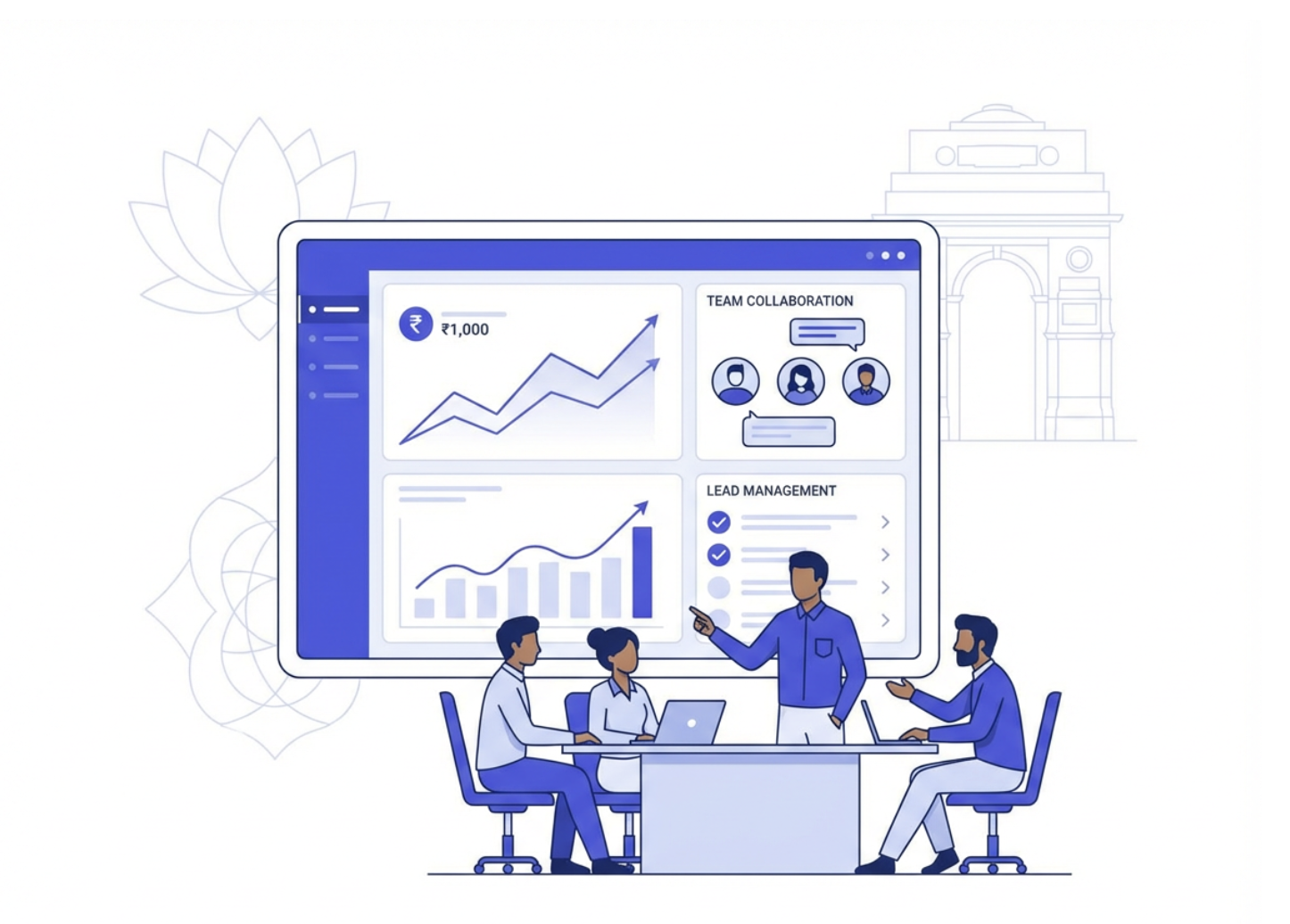
- Manage team collaboration so everyone stays aligned
- Analyze sales performance with real-time dashboards
- Improve customer retention through better communication
Think of it as the nervous system of your business. Every customer interaction flows through it.
Why Indian Startups Need CRM
The Lead Loss Problem
Indian startups lose leads because responses are slow. A prospect calls or messages—but your team is busy. By the time you respond, they’ve already chosen a competitor.
CRM solves this with automation. AI can respond to new leads in under 90 seconds via WhatsApp, email, or SMS. That’s the difference between winning and losing deals.
Cost Savings
International CRM tools like Salesforce (₹1.2 lakh/month) and HubSpot (₹65k+/month) are expensive. They’re built for enterprise teams with massive budgets.
Indian startups need something affordable. A good CRM under ₹10,000/month gives you enterprise features without the enterprise price tag.
Scaling Without Chaos
As you grow from 5 to 50 to 500 customers, manual processes break. You need systems that scale with you. CRM lets you manage 10,000 customers with the same team size.
Key Features to Look For
1. Lead Management & Pipeline
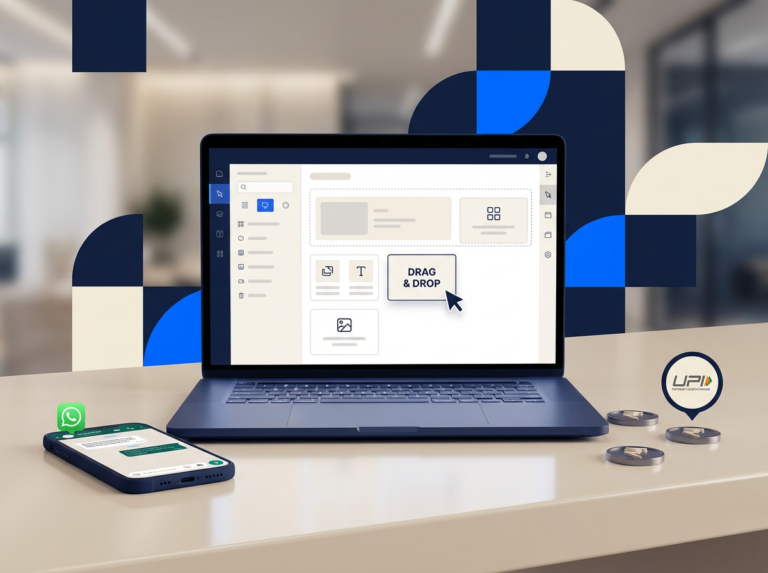
Your sales pipeline should be visual. Drag-and-drop cards showing where each lead is. How many are in “discovery”? How many in “negotiation”? This visibility is critical.
2. Automation Workflows
Automation saves hours every week. When a lead signs up, automatically:
- Send a welcome email
- Assign to the right sales rep
- Schedule a follow-up call
- Add to your email nurture sequence
3. WhatsApp & SMS Integration
In India, WhatsApp is king. Your CRM should integrate with WhatsApp so you can send messages, track conversations, and automate responses—all from one dashboard.
4. Email Marketing
Send bulk emails, track opens/clicks, and nurture leads automatically. Segment your audience so the right message reaches the right person.
5. Team Collaboration
Your sales team needs to see customer history. When a customer calls, the rep should know everything—previous conversations, purchases, support tickets.
6. Analytics & Reporting
Data-driven decisions beat gut feelings. Track metrics like:
- Conversion rate by source
- Average sales cycle length
- Customer lifetime value
- Team performance
7. Mobile Access
Your team is always on the move. A mobile app lets reps update deals, log calls, and check dashboards from anywhere.
CRM Pricing in India
Pricing varies widely. Here’s what to expect:
- Budget CRM: ₹3,000–5,000/month. Basic features, limited automation.
- Mid-range CRM: ₹5,000–15,000/month. Solid features, good automation, team collaboration.
- Enterprise CRM: ₹20,000+/month. Advanced customization, dedicated support, unlimited users.
For most Indian startups, a mid-range CRM offers the best value. You get professional features without overpaying.
How to Choose the Right CRM
Step 1: Define Your Needs
Ask yourself:
- How many team members will use it?
- What’s your monthly lead volume?
- Do you need WhatsApp integration?
- What’s your budget?
Step 2: Compare Options
Look at features, pricing, and ease of use. Request demos from 3–4 providers. Don’t just read reviews—try the software yourself.
Step 3: Check Integration Capabilities
Your CRM should connect with tools you already use: email, calendar, payment processors, accounting software.
Step 4: Evaluate Customer Support
Good support matters. Can you reach someone quickly? Do they offer training? Read reviews about their support quality.
Step 5: Start with a Free Trial
Most CRM providers offer free trials. Use it for 2–3 weeks with your actual team. See if it fits your workflow.
Implementation Tips
1. Clean Your Data First
Before importing customer data, clean it. Remove duplicates, fix formatting, standardize fields. Bad data in = bad data out.
2. Train Your Team
Don’t just install the software and hope people use it. Train your team on how to use it. Show them how it makes their job easier.
3. Start Simple
Don’t try to automate everything on day one. Start with basic workflows. Add complexity as you get comfortable.
4. Set Clear Processes
Define your sales process. What stages does a lead go through? What actions happen at each stage? Document this before configuring your CRM.
5. Monitor Adoption
Track who’s using the CRM and who isn’t. Address resistance early. Make it clear that CRM usage is non-negotiable.
Common CRM Mistakes to Avoid
Mistake 1: Choosing based on price alone. Cheapest isn’t always best. A ₹3,000 CRM that nobody uses is worse than a ₹10,000 CRM that your team loves.
Mistake 2: Not integrating with existing tools. Your CRM should talk to your email, calendar, and accounting software. Disconnected systems create extra work.
Mistake 3: Poor data hygiene. Garbage in, garbage out. Keep your customer data clean and updated.
Mistake 4: Ignoring mobile. Your sales team needs mobile access. A desktop-only CRM is outdated.
Mistake 5: Lack of executive buy-in. If leadership doesn’t use the CRM, neither will the team. Lead by example.
Conclusion
CRM software is no longer optional for Indian startups. It’s essential infrastructure.
The right CRM helps you respond to leads faster, automate repetitive work, and scale without hiring proportionally. It’s an investment that pays for itself through better sales and happier customers.
Start with a free trial. See how it feels. If it solves your problems, commit to it. Your future self will thank you.